
Wide Open Empty
I Finally Wrote the Modern Western Noir Crime Novel I Have Been Thinking About For Years-- Coming in late June 2026

On a recent episode of the Writing Forward podcast, host Jeff Oloizia grilled Maggie Ginsberg about her writing. As she always does, Maggie spoke with eloquence and conviction about how her writing explores ideas of community.
As I listened to the podcast, I found myself exploring my own writing in my head, as one does when listening to other writers talk about their writing.
I never wanted to write “serious” books. I just wanted to entertain people. I never consider big picture ideas like theme or meaning. I’m just out there telling stories. If I can add a joke in here or there, all the better.
However, with introspection, I realized I might be the antithesis of Maggie Ginsberg. I’m much more interested in isolation and loneliness.
Maybe this is a side effect of growing up out in the sticks of rural Wisconsin. While I always appreciated summer break—because it meant no school—it had the side effect of trapping me in the boonies with little to do.
My mother used to take my sister and me to the Mount Horeb Public Library on Monday mornings. We were required to gather several books to check out and subsequently read. Most of the time, I’d have them read well before the following Monday.
Outside of that, there were always chores to do. The chores on a farm are never-ending. We had a huge lawn, and it seemed to be in constant need of mowing. Every time there was a storm, all the trees around the lawn would shed dead branches, and those had to be picked up and taken to the woods for disposal. And when I got a little older, my parents got me a 15-speed touring bicycle for my birthday one year, and I started riding long distances when I could. Anything to get out of the house.
Looking back with the wisdom of age and the clarity of distance, I miss those days. I envy those days now, and I wish I could go back. As a child of the ‘80s, I clearly remember what it was like to walk out of the house and just…not be in the house for several hours without my parents thinking it was a problem. There were no cell phones to tether you to people. There were no obligations to answer text messages. There was no doomscrolling the news to see the next round of blatantly criminal activities our government was perpetrating, with no one stopping them. It was a simpler time.
Not to mention, being out in the sticks as I was, other than the occasional car passing the house, we could go a whole day without seeing other people. That’s the real appeal.
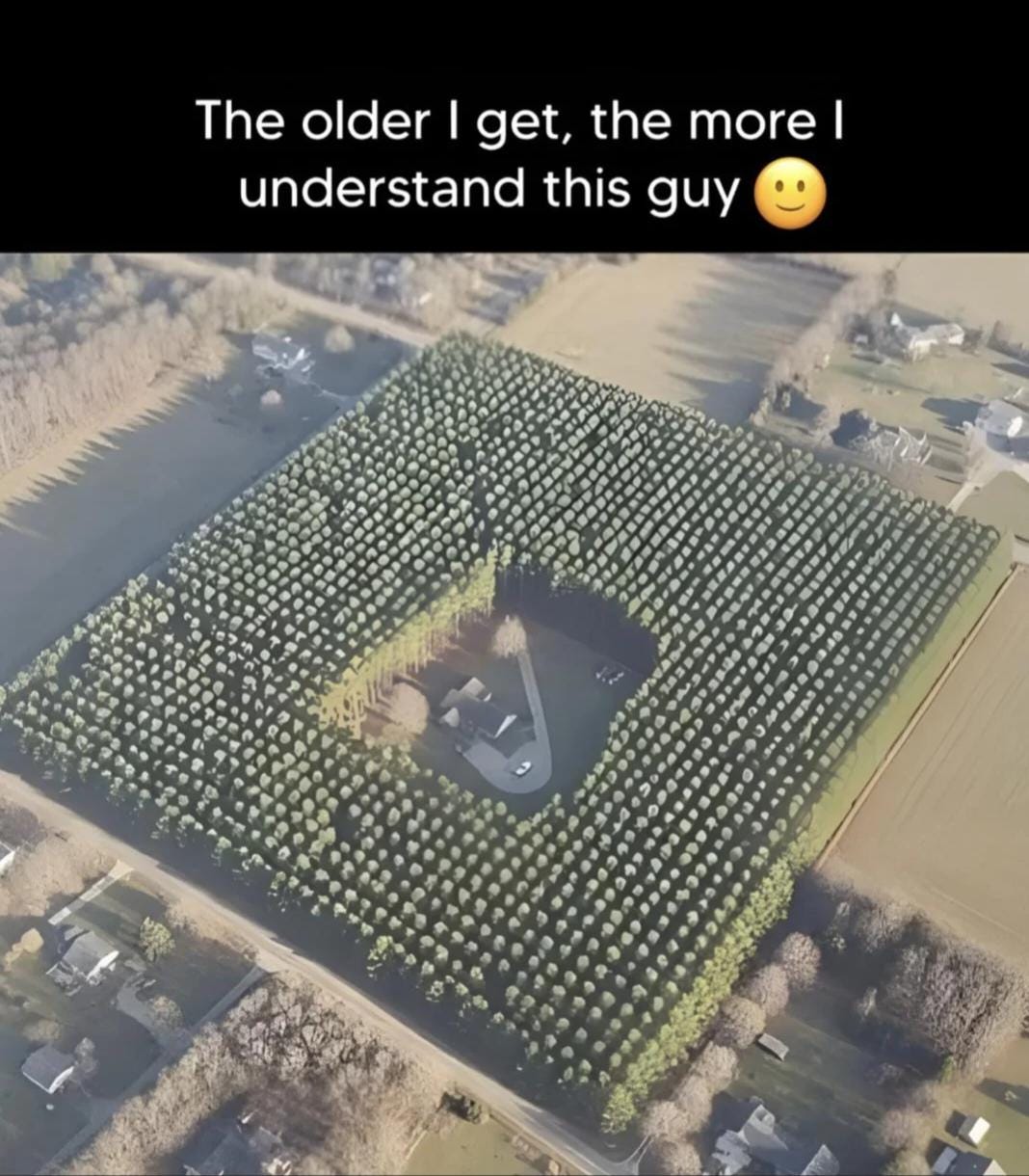
But growing up that way, you spent a lot of time alone, probably more than most kids. You were trapped in your head a lot of the time.
I think that’s why so much of my writing and thinking is about isolation.

The Survivor Journals came about because I desperately wanted to get home one night after a terrible day at work. I made the turn from the Interstate onto Highway 151 to get back to Sun Prairie, and found out that some numpty had done something stupid, caused an accident, and backed up traffic for miles. I was less than four miles from my house, but it took me over half an hour to get there, thanks to someone’s incompetence behind the wheel. I was seething. I remember wishing that I had Carrie White-levels of telekinesis so I could just start mentally hucking cars to the side of the road so I could just get home…and then my brain gave me the image of the empty highway, and I thought about how wild it would be to never have to deal with traffic again…and suddenly, I had the seed for a post-apocalyptic survival novel.
Through three long books, I explored ideas of loneliness. It gets to you, man. It eats away at you.

Abe and Duff are two lonely guys. Abe, dealing with the fallout of his recent divorce and feelings of inferiority, and Duff, with his broken past and Sherlockian monasticism—they are strange little men who live a strange little existence.
They are both utterly lonely while trapped in the middle of Chicago, a city of almost 3 million people, in the heart of a greater metro area of almost 10 million people.
I think the loneliness that comes from feeling isolated in the midst of so many people fascinates me. It’s loneliness due to a lack of human connection, not location. I think many of us feel that at times. We’re adrift in a sea of humanity, but still stuck on islands of our own making. In the internet age, we can reach out and connect with complete strangers, yet we still don’t know some of our neighbors’ names.1

In Welcome to Meskousing, Shelby Ree is an outsider to a community that typically shuns outsiders. However, since Shelby is the sheriff and of the bloodline that swore to protect the county, they accept her immediately. But since Shelby has the gifts that come with being the protector of the county, there’s still a sense of isolation that comes with having the weight of duty on her shoulders.
Shelby is also a leader, in charge of an odd assortment of deputies who are loyal to the county, and to her by extension, but as a leader, there is still a sense of separation from the underlings.

Strange Angels is the ultimate tale of being alone. It’s literally a single ship with a misfit crew against the most powerful corporation at the edge of space. The crew might serve as an ersatz family unit, but they are one entity against the universe.
Not to mention, they’re all dealing with isolation and loneliness in their own ways: Nathan Pageant never got over his relationship with Sunny Yeong. Crispy, afflicted with achondroplasia, has always felt different. And Quick Huffman, the cyborg merc, is not-quite-human and carrying the burden of how many people she has killed. Add in the mystery of Anne Medea, and you have four separate individuals trapped in their own little worlds, despite being on board a near-derelict transport ship in the middle of space.
Loneliness and isolation seem to be a recurrent theme in my writing, so why should we bother changing now?
Without further ado, Spilled Inc. Press is proud to present:
Wide Open Empty
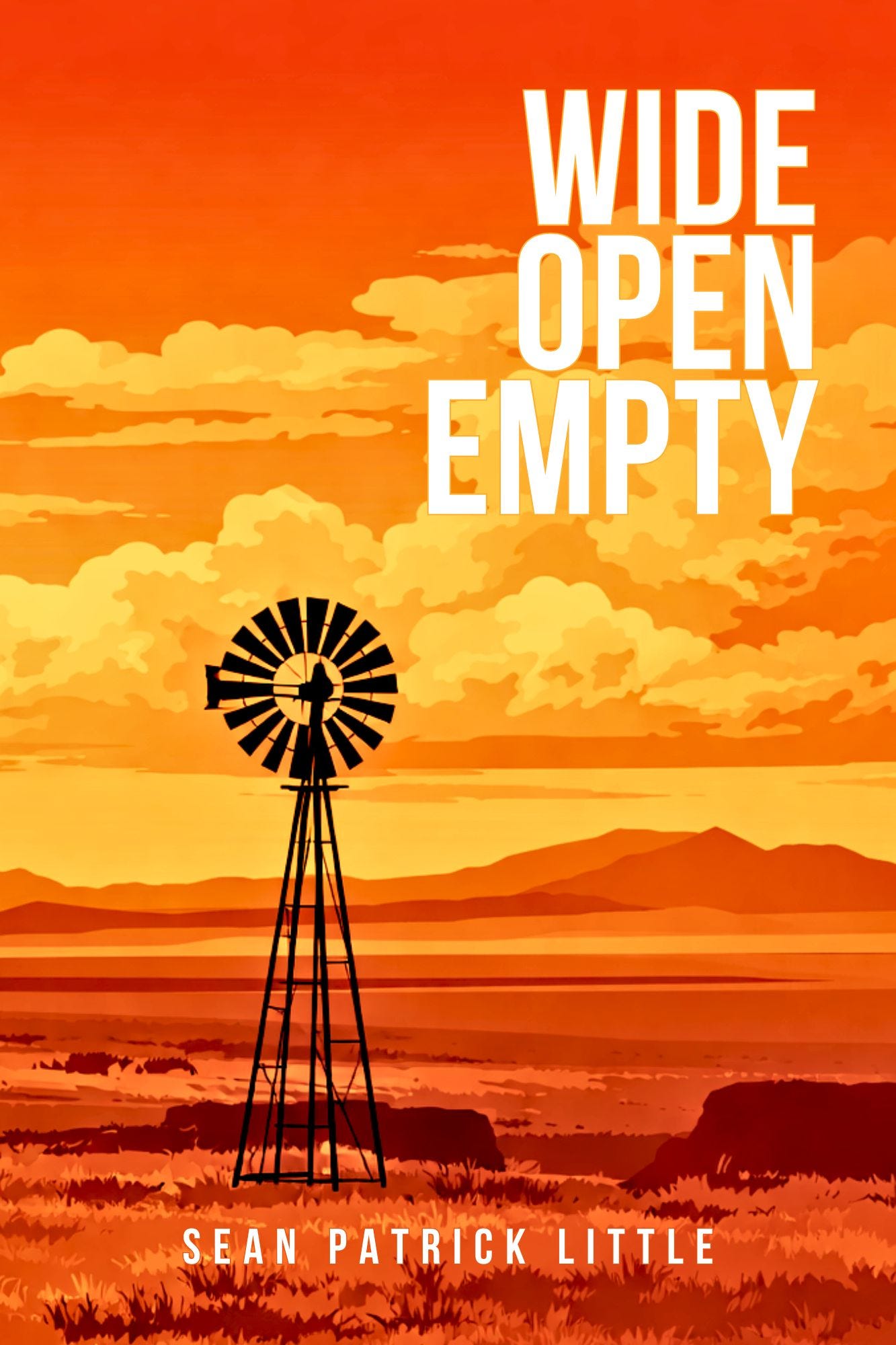
Out at the end of June 2026, Wide Open Empty is a modern western noir crime novel, and probably the most traditional crime novel I’ve yet written.
From the back cover:
Collin Croy was supposed to leave Avalon for good, supposed to be a big NFL star. When that plan collapses, he returns defeated to the dusty farming town where he grew up, surrounded by endless wheat fields that offer no escape.
His homecoming is not a happy one. He finds his father dead, and the death is ruled a suicide and accepted too quickly for Croy’s tastes. He cannot believe his father was the type of man who would give in to sadness.
With no suspects and no clear motive, Croy has to piece together what happened to his father, and he finds that the tiny town he left years ago has changed. There is a darkness just below the sleepy small town facade.
The prairie offers plenty of land where people intent on doing harm can hide.
You can’t go home again.
Set on the vast expanse of prairie country in southeastern Colorado, Wide Open Empty is a book that’s been in the back of my noggin since March of 2004, when I was offered a chance to interview for a job in Manzanola, Colorado. After seeing the town of 1100 people, and realizing how far out in the middle of nowhere, in the center of nothing, the town was (not to mention the pay was atrocious), I politely declined the offer and drove back to Wisconsin.
On the drive back, I ended up on Hwy 50, heading east. I drove through Rocky Ford, La Junta, Las Animas, and Fort Lyon before passing through Lamar, Colorado, just before I crossed the Kansas border.
I was struck by two things on that drive: the isolation and the relentlessly flat ground.
I remember driving for twenty to thirty minutes at a stretch, during which I saw no other cars. The road was empty in front of me and behind me, a long ribbon of flat black stretching to a point on the horizon. I found it utterly fascinating.2
Life cannot be easy, so far removed from civilization. While the small towns might offer some of the amenities of big city life, they couldn’t offer them all. When I saw a movie theater, it was one screen, maybe two. And it was showing a second-run picture that had already been out for weeks. The grocery stores were not much bigger than the Kwik Trip down the road from my house.3 The larger towns had populations ranging from 3,000-7,500 people (Lamar has 7610 as of the 2020 census), and between those towns were these strange blips on the map where a couple hundred—or sometimes fewer—people would gather in tiny, hardscrabble communities.
It’s not the sort of life for everyone, but I found it to be such a change from everything I knew growing up that I couldn’t stop thinking about it.
After Google Maps introduced StreetView, I found myself heading to that part of Colorado and dropping the little PegMan character on random roads just to see what it looked like, to see if my memories of that place had changed much over the years. To no one’s surprise, they have not changed much in the twenty years since I was last out there.
Many of those communities are dying slow, miserable deaths. The populations of many of them are in decline. Some of those tiny blips on the map are nothing but houses in sore need of repair, without much life left to them. The prairie will claim them as soon as they are abandoned, swallowing them under the stunted scrub brush and Blue Grama.
Combining my fascination with such a place and my love for modern western mysteries like the Walt Longmire and Joe Pickett novels, I wanted to craft my own version of a modern western crime story.
Thus, we have Connor Croy, a former high school football star who led his hometown’s high school football team to their only state championship, had a mildly successful college career at NMSU (Go Aggies!), and eventually failed to make it as a professional—despite stints in every league offering a paycheck, including the Italian Football League.4
With nothing else going for him, Connor returns home to find his father dead from an apparent suicide, which Connor refuses to accept. His search to prove his father didn’t die from suicide uncovers some revelations about his father that Connor never expected, and it forces him to make some decisions about his own life.
Wide Open Empty is the most traditional crime novel I’ve written yet. There are a couple of funny lines, but I wouldn’t say it’s a funny book. It’s actually fairly dark, much closer to the work of S.A. Cosby than Craig Johnson.
It will be out on Kindle (and Kindle Unlimited) at the end of June, with paperbacks appearing around the same time. (But due to shipping and logistics, nailing down an exact date for paperbacks is more difficult.)
There is already a pre-order link on my website for personalized copies, which will come with other goodies like bookmarks and stickers.
Being a nobody author with no promotional abilities and no marketing skills in this social media age, I’ll probably not be doing an onslaught of things like podcasts, blogs, etc…
This will be another one of those throw-it-out-there-and-hope-for-the-best things where I’ll rely on pure luck and happenstance to market the book for me.
Wide Open Empty was written as a standalone novel, but could become a series if people actually like it. So, fingers crossed.
This is one of those books I needed to exorcise from my brain. I have wanted to write something like this for years, so I finally did.
I hope you don’t hate it.
Thanks for reading.
I have lived in my neighborhood for 18 years. I still don’t know the names of most of my neighbors. I’ve tried introducing myself when I see them, but they aren’t interested. They’re nice people, but they’re just not down with making friends with the neighbors.
I also vividly remember listening to a Lillian Jackson Braun book on CD that I got from the library while I drove home. (This was before Bluetooth, children…) If you’ve read Bring the Heat, my love for LJB’s work is why Duff was insistent on getting a detective cat.
Not to brag, but I have FOUR Kwik Trips within walking distance of my home. I’m living the Wisconsinite’s dream.
The Italian Football League is real. It exists. Former University of Wisconsin quarterback John Stocco even did a stint over there, playing in Milan for the Rhinos Milanos. John Grisham even broke away from his legal thrillers to write a fun little book about it: Playing for Pizza. (My favorite Grisham novel, actually…) In Wide Open Empty, Connor spent a year in Legnano as a player-coach for the Legnano Frogs in the far north of Italy.
I look forward to reading it, Sean!
I would argue that being able to put isolation and loneliness into words is a form of community. :) New book looks really good. God bless the Mount Horeb Public Library forever and ever.