
The Ol' Hometown
A Ghost Story I Submitted to an Anthology That Wasn't Selected

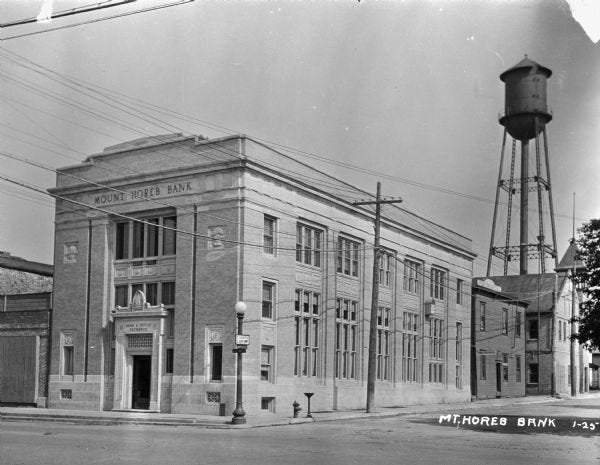
How long had it been since she set foot in the ol’ hometown? Five years? Longer? Felt like an eternity.
Strange, isn’t it? You spend all of high school desperate to get out of your hometown, but after a few years away, you only want to get back. There’s just something about coming home.
Ideally, Amanda hoped she could return to Mount Horeb as a success. She hoped she’d have money, a car that turned heads, maybe even a house. She hoped people would see her name on IMDb and think, Amanda did it! She became a star. It was all she had ever wanted when she haunted the stage for four years in the high school theater.
That never manifested for her. She wished she knew why. Luck, probably. Everything was based on luck in the end, wasn’t it? You could work as hard as you want, do all the right things, and so much would depend on being in the right place at the right time.
Amanda paced her bedroom. All the trophies from high school track were still on her dresser. Her posters were still on the walls. Everything had a layer of dust on it, but her mother was never a great housekeeper, so she wasn’t surprised. It was nice of her parents to save her room for her. They were the best part about returning home.
Amanda called out to see if either of them was home. It was the middle of the morning, so she doubted it. Both of them still worked. Her mother was a nurse in Madison. Her father was a Realtor. Capital R. It was a registered trademark, and it was what separated regular licensed real estate professionals from people who knew their shit, he always said.
Amanda looked out the window at the blue skies of that summer morning. Birds filled the trees, and they were in full-throated song. The sun was hazy and warm. That smell of the day, the rich loamy smell of a humid day after a rainstorm, was in full effect. It was intoxicating. It crept through the screens on the second floor of her parents’ home, beckoning her outside to take in more.
A walk was just the thing. Her mother wouldn’t be home until at least 3:00 PM, and her father’s hours were never concrete. She would have to entertain herself for a little while, and a walk was a great distraction, a great way to reconnect with the town.
Walks reminded Amanda of her childhood. Somewhere around third or fourth grade, her parents were satisfied that Amanda knew the town and was a safe and capable bike rider. They also knew that in a town of barely five-thousand people, there weren’t too many people they didn’t know in some way, shape, or form. Amanda’s father had sold many of them houses. They knew all the families in their neighborhood. Half the town was distantly related to each other. It was as safe a Middle America dream location as it could possibly be. Life in the little town was like something from a Jean Shepherd essay, so Amanda’s parents granted her all the freedom her legs and bike could provide. The entire town was at her disposal.
Walk to the diner for a milkshake? Go for it.
Walking to and from school? Absolutely.
Walking over to her friend’s house, the one who lived near the elementary school, which was across town, over a mile away? Go nuts, kid.
Just be home for dinner.
And be careful crossing the street.
* * * * *
The downtown was not what she remembered. The old yarn and craft shop was gone, replaced by a yoga studio. The diner had been gutted and turned into an upscale eatery with dim lights and overpriced drinks. The homey, kitschy shops were gone. It didn’t feel like home anymore. The exteriors of the buildings were the same, but the interiors were all different. Everything looked like she remembered it was supposed to look, but it wasn’t right. Amanda didn’t like it. Thomas Wolfe was right: you can’t go home again.
There had been a time when Amanda would have seen someone she knew, either on the sidewalk or in a car rolling down the main drag. She might have been stopped by old Mr. Hauge, who would have asked her how her parents were doing and how her grandmother was. Amanda always wondered if Mr. Hauge had been sweet on her grandmother at one point, but time and tide conspired to keep them apart; forever friends, never lovers.
Now, though, the sidewalks were empty. People did not walk as much as they used to, and when she did pass someone, they were strangers. They were cold and aloof. No one even returned the head nod of acknowledgement Amanda gave them, a little symbolic greeting, a simple dip of the chin that said, I see you there.
As she walked down Garfield Street, one of several streets in town named for presidents, Amanda passed a woman pushing a toddler in a stroller. The baby waved, smiling oddly at her in that way that toddlers do as they learn to process the world around them. The woman, though—nothing. Cold, dead eyes purposely looked past Amanda as though civil politeness was no longer expected or necessary.
This was not the small-town Wisconsin Amanda knew. The political climate had changed so much over the last few years, but in her heart, she hoped that people would still want to at least act friendly to their neighbors, even if they didn’t mean it. People sharing a sidewalk should at least be able to exchange a smile and a nod.
Even the dog in the yard of the house nearby was not the sort of friendly, happy-go-lucky animal Amanda remembered from childhood. The dogs, especially. Everyone had a dog when she was a kid, and they were always happy to see you. Tails wagged a million beats a minute, excited tongues lapped at you. They were thrilled to see a friend or a stranger alike. Just another person who might give them some belly scratches.
The dog in the next yard barked at Amanda in a territorial manner. He paced the lawn nervously, preparing to defend the house and family if Amanda proved herself a danger. When Amanda moved closer, the dog retreated. It moved closer to the house. The barks diminished into concerned, throaty growling and punctuated with squelchy yelps.
Amanda tried to hold out a hand to show that she was no threat. The dog retreated further. She stepped closer, and the dog pulled at its leash. A nervous whine. Thrashing. Did it want to fight or run?
Amanda backed off. “Easy, boy. I’m a friend.”
The owner came out of the house, summoned by the dog’s noises.
Amanda held up her hand and kept walking. “Sorry. My fault. I thought he wanted to play.”
The owner unclipped the dog from the yard leash and ushered it inside without a word.
This wasn’t the same small town she’d left, no matter how many progressive political signs people put up. That was the way of the small towns, though. Talk a big game when it comes to social issues, but when it comes to your fellow humans, it is all about staying off lawns and not rocking the boat.
Had it changed, though? Or was it clouded by time’s rosy tint? Children perceived the world differently from adults. When she was a kid, she remembered people being friendlier. Was that because she was a kid, and people were generally nicer to children? Or was it because she was older now, and time had changed how she saw the world? Where once people were smiling, were they now scowling? It was a philosophical question she would have to ponder.
* * * * *
The library loomed large ahead of her. She had walked for some time, more than a mile, but it had not felt like it took too much time. Minutes, maybe? She couldn’t tell. The sun was high overhead, and the traffic was light. The town was still in the sleepy part of the morning.
Did the sleepy part ever stop in the summer?
Amanda walked into the library through a door that a woman was holding open for her toddler. The toddler gawped at Amanda with large, wide eyes. The baby clutched a stuffed elephant. She held the toy tighter to her chest when Amanda passed.
“Don’t worry, kiddo. I’m not going to take your elephant.”
The baby watched Amanda pass, but the child’s mother clucked her tongue and called to the child, urging her to keep walking.
Amanda walked into the familiar library, a place she’d spent so much time as a child. She liked the big windows that overlooked the golf course. She liked the shelves of books. She liked that the libraries never minded when she sat in the plush chairs for hours reading books.
Amanda saw the reference section and saw the stacks of old yearbooks from the high school. She hadn’t seen a yearbook in ages. Where was her senior yearbook? Probably in a box somewhere. Probably in the basement.
Amanda drifted to the reference section. Her eyes scanned the stack until she saw the year of her graduation. The book had been black that year, with gold lettering. Most of the others were red and white, the school colors, but that year was different. She didn’t know why. Probably a Jostens thing. Maybe they were cheaper to print that way.
She pulled the book off the shelf and sat on the floor with it, hidden from the eyes of the librarians and other patrons. She was in her own little world.
Amanda flipped idly through the pages. She stopped on the choir photo. She looked at her friends’ faces. No matter how old they got, they would always look like this in Amanda’s mind. Vainly, she searched for her own face, but didn’t see it. Had she been sick the day they took the photo? Must have been. That would be her luck, wouldn’t it? She almost never got sick, but it would be just her luck that the one day she stayed home to sip Sprite and watch The Price is Right, they’d do the important club photos at school.
Why didn’t she remember she wasn’t in the choir photo, though? Seems like something she would have remembered. Someone would have called her to ask where she had been that day, and Amanda would have had a minor fit, knowing she was excluded from the photograph. Did she have a fit and forget about it? That’s not like her.
She flipped a few more pages. Surely she would be in the softball photo. She remembered her uniform. She remembered playing. But she was not in the softball team photo, either.
Chewing on her lower lip, Amanda flipped forward several more pages. Somewhere, the senior photos would start. She would be in that section, for sure. Why did she not remember her senior photo, though? Odd.
Amanda found the pages with the glossy color photos of the senior class, the only color photos in the whole yearbook. That’s what made senior year special. The rest of the photos were black-and-white, even the grids of the underclassmen. She saw Tim Applewhite, Brenda Beecher, and the rest of her friends. She flipped forward two pages to Cara Finch, Cassidy Hansen, and Marcus Johnston. Two more pages brought her to Orion Nelson, Parker Ott, and Rachel Pruitt.
She flipped the next page, and her chest got tight. She wasn’t there.
For years, she had been sandwiched between Bobby Rainer and Wilson Small. Her class had never been large, and Saberhagen had always preceded Small. She should have been right there, leading off the charge of surnames that started with S, but she wasn’t.
Amanda got angry. She would have said something if she had gotten her yearbook and found she had been omitted. What?
She flipped to the page before and the page after. It had to be a mistake, right?
She wasn’t there.
Amanda flipped to prom. She remembered prom. She would be in the prom photos. She scanned through the pictures. She wasn’t in any of them, not even the ones with Kim Harrison and Ollie Wynn. They were her best friends. If they were in a photo, she should have been right there. She would have been right there with them. Why did she remember prom if she wasn’t in the photos?
Or did she remember prom?
Amanda sought the memories in her mind and realized she couldn’t remember prom. At all. There was not a single solid memory of prom in her head. She froze in frustration and confusion. She had to remember prom. Of course she went to prom. Why would she miss prom?
But she had no conscious memory of anything about prom. She couldn’t recall her dress. She couldn’t recall who asked her to the prom. She couldn’t…
Panicking, Amanda flipped to the graduation photos. She wasn’t there, either.
What in the hell was going on?
Amanda let the pages fall past her fingers, past the final pages, the candids, and to the last few pages of ads. She went to the appendix at the end and searched for her name. She found it. With a single listing: page 208.
Frantically, she flipped to that page. It was the last page in the book, past the ads, past the appendix, too. On the final page before the blank inserts for autographs, there she was. Her senior photo stood alone in all its glory, in full, vivid color under the words In Memoriam.
What?
Amanda dropped the book and scrambled backwards as though the thing might bite. She kicked it with her heel. The book spun across the industrial carpet and banged off a shelf, making a hollow thump.
Practical joke. It had to be. Someone did this. She was on camera, wasn’t she?
Amanda looked for the cameras. She looked for someone to confirm she wasn’t dead. Then, with terror gripping her chest, she rushed to the librarians at the main desk. She clapped her hands. “I’m not dead, am I? You can see me, right?”
They didn’t flinch. They didn’t look up. Amanda pounded her fist on the desk. “Hey! I’m talking to you!”
They said nothing. They continued to work.
A wave of memory crashed through Amanda’s mind. She saw bits and pieces. Flashes. A twisted splash of sound and light. A car. The crosswalk—the same one her parents warned her to be careful at when she crossed Main Street. A driver distracted. Texting, maybe? The radio? She wasn’t looking at the road.
Amanda, headphones in her ears, equally distracted. She trusted the light. Didn’t look to the right. She stepped off the curb. The car was going too fast. The driver didn’t see her until—
Amanda felt the car hit her hip, so much steel, so much power. She felt the impact of windshield glass on her face. She fell backward, the car dragging her on the pavement until...
…until she was dead.
She remembered now.
But she couldn’t be dead.
She was right there. She was alive. She had been in her bedroom that morning. She had…
What did she have?
Fragments.
Shards of memories.
Was she real? Was the library real? What was going on?
Amanda’s chest hurt. She gasped for breath. If she were dead, then why did she have trouble breathing? She couldn’t be dead, she simply couldn’t be!
She fled the library, crashing through the glass doors, desperate to be in the sun, desperate to find someone who could see her. Certainly, someone would see her in the light. They would have to see her.
Wouldn’t they?
* * * * *
One of the librarians looked up from the computer she was working on. She was new. “The door just slammed open by itself.”
The other librarian shrugged and jabbed a thumb at the clock on the wall. “Happens every couple of days about this time. We don’t know why.”
“Weird.”
“You’ll get used to it.”
“Must be a ghost.”
The second librarian adjusted her glasses and went back to sorting books. “Probably.”
Neither said anything further about it.
* * * * *
Amanda stared out at the town beyond her bedroom window.
How long had it been since she set foot in the ol’ hometown? Five years? Longer? Felt like an eternity.
Strange, isn’t it? You spend all of high school desperate to get out of your hometown, but after a few years away, you only want to get back. There’s just something about coming home.
Ideally, Amanda hoped she could return to Mount Horeb as a success.
I really love this story. Such a great twist.
Great story. It went a direction I never expected.